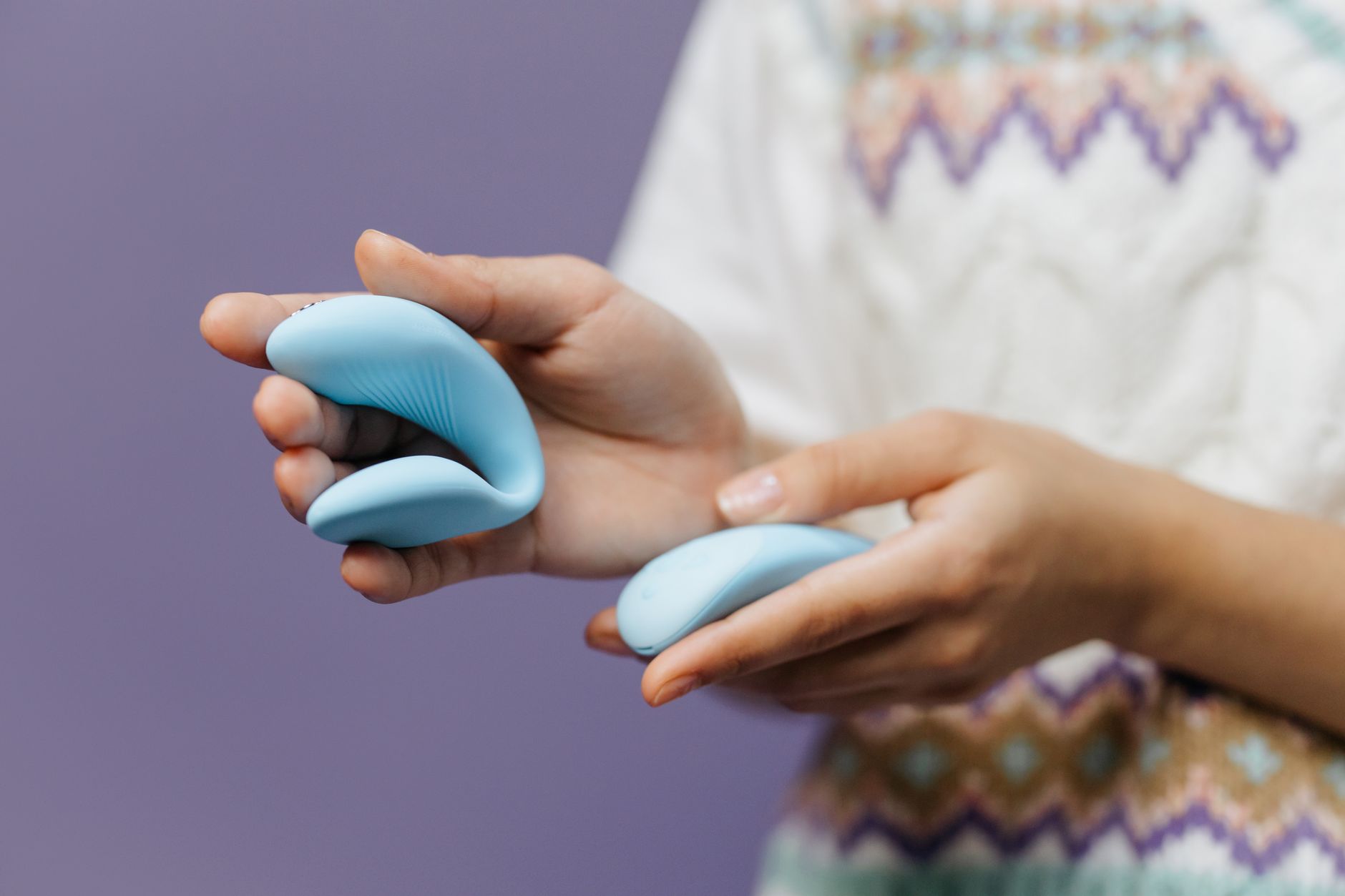
Let's talk about what actually happens to your clitoris after 40
Your clitoris doesn't shrink. Your nerves don't stop firing. What changes is the tissue around those nerves, the hormonal environment that amplifies sensation, and the speed at which blood reaches the area when you're aroused. That's it. But that "it" adds up.
Most people notice the shift between 40 and 55, though some feel it earlier or later depending on hormones, medications, and life stress. The sensation doesn't vanish. It transforms into something that requires different tools and a different approach.
Why sensitivity feels different (the actual mechanism)
Estrogen is a major player here. As estrogen drops, two things happen simultaneously. First, the clitoral glans (the external sensitive tip) loses some of the plumping effect estrogen provides to tissue. That sounds alarming. It's not. It just means direct friction that felt perfect at 30 can feel sharp or overstimulating at 50.
Second, arousal takes longer. The blood vessels that engorge the clitoris work on a slower timeline. You might need 15 or 20 minutes of foreplay instead of 5. This isn't a problem. It's information.
Third, the clitoral hood (the tissue covering the clitoris) sometimes sits lower or differently as surrounding tissue changes. This means the angle of contact that worked before might miss the mark now.
Here's the part nobody tells you: your clitoris has thousands of nerve endings, and most of them don't care about estrogen levels. They're waiting for the right kind of stimulation. Friction alone stops being enough. Suction, vibration patterns, and rhythmic pressure become your friends.
Why lemon vibrators and clitoral suction devices work so well for this shift
The Lem and similar air-suction devices bypass the friction problem entirely. Instead of rubbing back and forth across tissue that's become more sensitive to direct pressure, suction creates a gentle seal and rhythmic pulse. Think of it as coaxing your clitoris into responsiveness rather than demanding it.
This matters because suction stimulates without the same mechanical wear. If your clitoris feels tender after direct vibration, suction often feels restorative instead. You can use it longer, at higher intensities, without irritation.
The patterns help too. Lemon vibrators offer multiple settings. Patterns 1 through 3 are soft and gradual. Perfect for extended warm-up when arousal needs time to build. Patterns 4 through 7 get more complex and intense. You're not locked into a single sensation.
The rhythm adjustment that changes everything
When sensitivity shifts, tempo matters more than raw power. A common mistake is thinking you need stronger vibration. Usually, you need different rhythm. The Lem's varied pulsing patterns (especially the longer, slower cycles in the lower settings) match how your arousal actually builds as you age.
Take 20 minutes with pattern 2 or 3. Let arousal accumulate gradually. Then, if you want intensity, shift to pattern 5 or 6. Your clitoris responds to this layering in ways it might not to constant, high-intensity buzzing.
Many people report that their most satisfying orgasms after 40 came from using clitoral vibrators with varied patterns at their own pace, not from seeking the fastest route to climax. That shift alone rewires the whole experience.
How to adapt your approach if direct stimulation feels less comfortable
Start with the device on pattern 1 or 2, positioned over the clitoral hood rather than directly on the glans. You're building sensation slowly. The whole point is to let blood flow in and tissue respond on its own timeline.
Warm up first. A few minutes of touching, kissing, or just thinking about what you want primes your nervous system. Then introduce the lemon vibrator. Patience transforms this from feeling like something's "wrong" to feeling like you've found the perfect key.
Lubrication still matters, even with suction devices. A small amount of water-based lube on your skin helps the seal form better and reduces any slight dragging sensation. It's not because you're dry. It's because the mechanism works more smoothly with moisture.
If you're using a lemon clitoral vibrator with a partner, communication gets easier. You can say, "I need 15 minutes to warm up," or "Start with the lower patterns and let me tell you when to shift up." That directness removes the guesswork and pressure from both sides.
The psychological piece (which is half the puzzle)
Here's what I see in my practice: many people interpret this shift as a loss. "My body doesn't work the way it used to." The brain believes that story, and the body follows. The nervous system tightens. Arousal stalls.
The truth is gentler. Your body is asking for something different. Not worse. Different. A lemon vibrator, or any clitoral vibrator designed for variable stimulation, is a conversation starter with your own pleasure. It's not a replacement for what you lost. It's an adaptation tool.
Some people find that after they stop fighting the change and start exploring it, sensation actually deepens. The orgasms feel more focused, more localized, more intense in a different way. Not all. But many.
When to check in with a healthcare provider
If sensitivity changes come with pain, numbness, or sudden loss of response, see a doctor. Genitourinary syndrome of menopause, pelvic floor tension, or nerve issues can all show up as "something's different." A few conversations with a menopause-informed GP or pelvic floor physical therapist can rule out anything that needs treatment.
If arousal builds slower but you still reach orgasm, that's normal. If arousal doesn't build at all after weeks of exploration, that's worth mentioning to someone. Testosterone therapy, topical estrogen, or pelvic floor work can help if that's the case.
The longer version of this story
Clitoral sensitivity changing with age isn't a signal to give up on pleasure. It's a signal to pay attention. Your body is telling you what works now. Lemon clitoral vibrators, designed with variable patterns and suction technology, listen to that signal. They meet your clitoris where it actually is, not where it used to be.
You deserve pleasure that fits your current body, not a technique that fit your body 15 years ago. That's not settling. That's growing.
People also ask
Why does my clitoris feel less responsive even when I'm fully aroused?
Tissue changes mean it takes more stimulation to trigger the same sensation. Lower estrogen reduces plumping in the clitoral glans. Less plumping means fewer nerve endings sit near the surface. This isn't permanent numbness. It's a geometry shift. Suction devices like the Lem compensate by engaging deeper nerve structures through gentle pressure rather than surface friction.
Can lemon vibrators help if I'm experiencing clitoral numbness specifically?
Yes, but it depends on the cause. If numbness is from hormonal shifts, the varied patterns in a lemon clitoral vibrator (especially the lower intensity settings) can wake up sensation over time. If numbness is from medication, nerve damage, or pelvic floor tension, you'll need to address that first. Many people use clitoral vibrators alongside pelvic floor physical therapy with real results. Check with your doctor about the underlying cause.
How do air-suction lemon vibrators differ from traditional vibrators for aging bodies?
Traditional vibrators rely on friction or direct oscillation against tissue. After 40, that can feel too intense or create irritation. Air-suction devices like the Lem create a seal and gentle pulse instead. This stimulates the clitoris without the same mechanical pressure. You can use it longer, vary the pattern easily, and adjust to arousal as it builds. For many people, suction feels more natural and more flexible than straight vibration.
Is it normal for orgasms to feel different after a certain age?
Completely normal. Orgasms often shift from quick and surface-level to deeper and more full-body. Some feel more localized. Some involve more of the pelvic floor. None of these changes mean the pleasure is less real or less intense. It's different. Many people say their most satisfying orgasms happened after 40 because they finally stopped chasing the sensation they used to have and started exploring what was actually happening in their body now.
Do I need to use a higher intensity lemon vibrator if my sensitivity has changed?
Often the opposite. Higher intensity can actually backfire if your tissue is more sensitive to pressure. Lower-to-medium intensity with varied patterns usually works better. Pattern variation matters more than raw power. Start with the lower settings of the Lem and give your body 15 to 20 minutes. Many people find they don't need intensity to reach orgasm. They need time and the right kind of stimulation. Let yourself explore that.
Can lemon clitoral vibrators help rebuild sensation if I've been numb for a while?
Yes. Consistent, gentle stimulation with varied patterns helps wake up nerve response over time. The Lem's lower intensity settings are especially useful for this because you can use them without triggering irritation or overstimulation. Pair it with patience and pelvic floor awareness (relaxing fully between sessions), and many people notice sensation returning within a few weeks. If numbness has a specific cause like medication or diabetes, address that too, but the vibrator is a solid part of the recovery.
Ready to explore what works for your body now? Get Lem Vibrator's clitoral tools are designed to adapt as your pleasure evolves. Start with your current body, not a memory of it. And if you have questions about what might work best for you, reach out. We're here.